Endovascular technique
Microcatheter navigation provides access to the ophthalmic artery without surgical incisions in the eye.
Geographic atrophy: a new investigational alternative.
Age-related macular degeneration is one of the leading causes of irreversible vision loss in adults over 60. In Buenos Aires, Dr. Mario Joaquín Saravia, President of Fundación Retina, is working on a multidisciplinary ophthalmic artery angioplasty approach.
Geographic atrophy is one of the most severe forms of AMD and can cause progressive loss of central vision.
AMD affects nearly 200 million people worldwide. Current therapies can control or slow some forms of the disease, but they do not restore vision that has already been lost. This is why research into approaches that address other potential mechanisms continues.
One line of research examines the role of vascular supply to the macula. The hypothesis proposes that improving ophthalmic artery blood flow could support ocular and retinal perfusion in carefully selected patients.
Microcatheter navigation provides access to the ophthalmic artery without surgical incisions in the eye.
The procedure is performed under general anesthesia and requires hospitalization and preventive monitoring.
It combines endovascular neurosurgery, retina, and macula expertise for a joint assessment of each case.
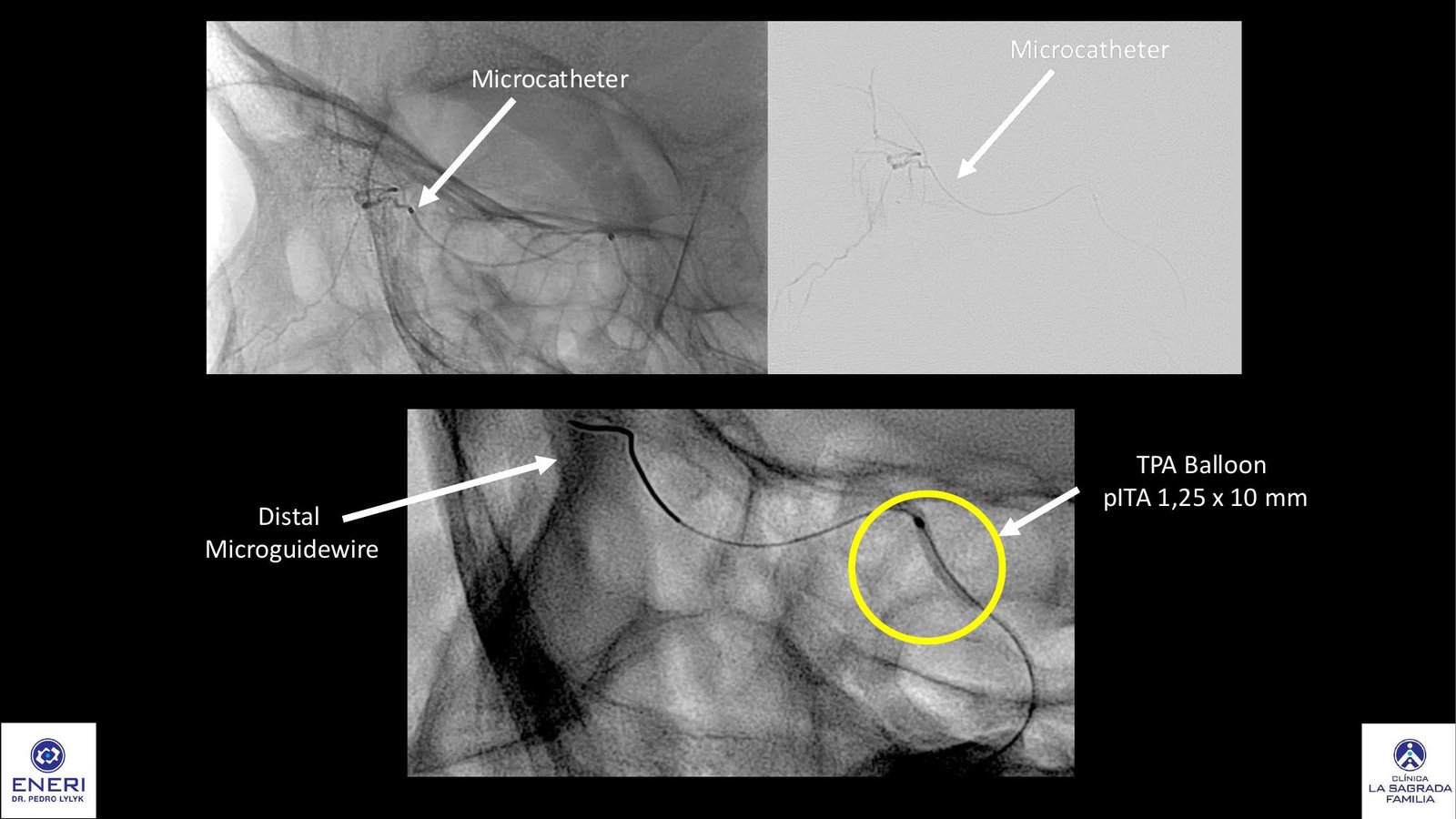
 Angiographic visualization during the procedure.
An endovascular procedure designed to restore blood flow in the artery that supplies the eye.
Using a specialized microcatheter, the team accesses the ophthalmic artery, observes the site of obstruction in real time, and uses endovascular devices to open the affected vessel.
 01
01
 02
02
The genesis of a strategic alliance connecting a vascular hypothesis, specialized technology, and retinal expertise in Buenos Aires.
For years, several researchers had proposed that vascular insufficiency might contribute to AMD. Jeff Franco, founder of a next-generation catheter company and a former collaborator of Judah Folkman, understood that the hypothesis could only be explored by changing perfusion with a device able to navigate an exceptionally small artery.
“What if we could perform angioplasty on an artery as small as the ophthalmic artery?”
Jeff Franco, Ocudyne · in collaboration with Dr. Phil Rosenfeld, Bascom Palmer Eye Institute, Miami
The project incorporated Dr. Phil Rosenfeld's scientific review and moved toward building a multidisciplinary team. It still needed a macular specialist willing to evaluate a radically different treatment concept. Dr. Mario Joaquín Saravia accepted the challenge because part of his own research supported investigating the vascular component of AMD.
From Buenos Aires, his role focused on ophthalmological assessment, patient selection, and clinical follow-up. The pilot study generated information on feasibility and safety, together with signals of visual improvement that were not part of the initially expected outcome.
A clearly defined process designed around each patient's safety and support.
The team gathers the medical history, ophthalmological studies, and clinical information required for a preliminary evaluation.
In Buenos Aires, the studies provided by the patient are reviewed and the examinations needed to confirm the status of the retina and macula are performed.
MR angiography is used to study the patient's individual vascular anatomy and plan the procedural strategy.
The procedure is performed under general anesthesia. A minimum 24-hour hospital stay is required for observation and preventive monitoring.
After discharge, ophthalmological examinations are repeated, usually one week later, to assess the patient's progress.
Patients who underwent arterial angioplasty share their experience.
Angioplasty and geographic atrophy patient.
Angioplasty and geographic atrophy patient.
Angioplasty and geographic atrophy patient.
Testimonials reflect individual experiences. They are not evidence of efficacy and do not guarantee that other patients will achieve similar outcomes.
The specialist responsible for ophthalmological assessment, patient selection, and follow-up for each case.
Born in Buenos Aires, Dr. Saravia is one of Latin America's most experienced retinal surgeons. He served as Chief of Ophthalmic Surgery at Hospital de Clínicas (UBA) and as Chair of Ophthalmology at Hospital Universitario Austral.
He is co-founder and former president of the Argentine Society of Retina and Vitreous. He currently serves as Principal Investigator at Buenos Aires Mácula Clinical Research.
His scientific work has long explored the vascular component of AMD. He is a member of the Club Jules Gonin, one of the world's most selective international societies dedicated to retina and vitreous.
Scientific publications on ophthalmic artery angioplasty for geographic atrophy secondary to AMD.
A city with a strong medical tradition, a distinctive culture, and the infrastructure to welcome national and international patients.

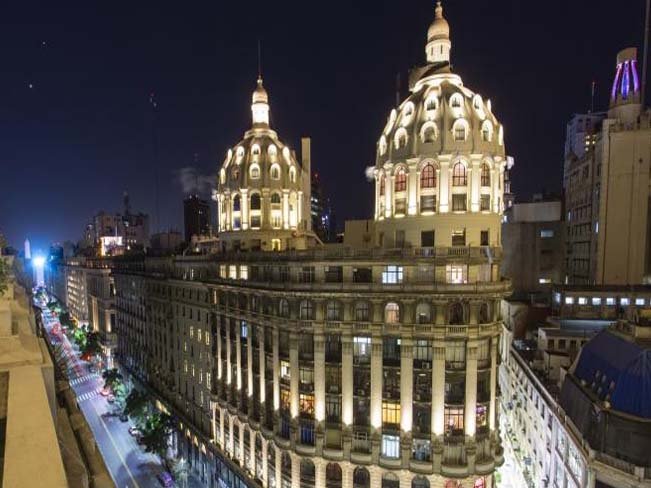

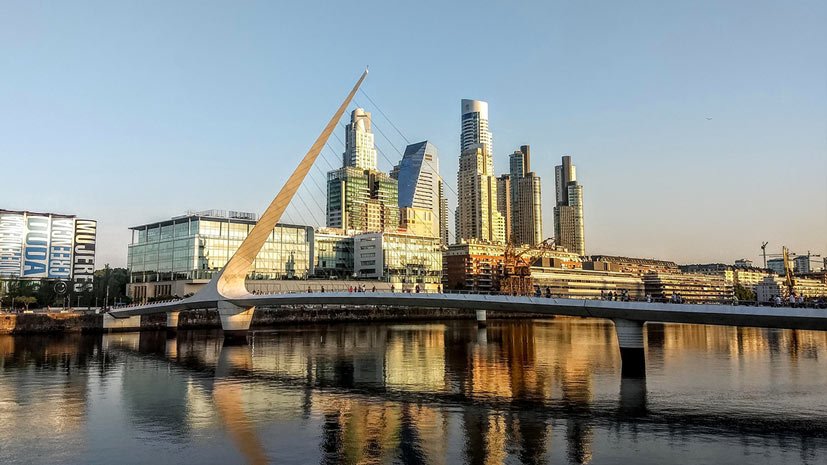
“Buenos Aires —both the city and the surrounding province— is the heart of Argentina. Our centers are located here, and this is where most visitors begin their journey through the country.”
Argentina stretches from the subtropical north to the glaciers of Patagonia and from the Atlantic to the Andes. Buenos Aires combines vibrant urban life with a strong European heritage that can be seen in its architecture, cafés, theaters, and cuisine.
The contributions of René Favaloro, Luis Agote, Bernardo Houssay, César Milstein, and Luis Leloir form part of a scientific history that continues through high-complexity research and clinical institutions.
Boulevards, architecture, museums, bookstores, and neighborhoods with distinct identities. From Recoleta and Palermo to San Telmo and Puerto Madero, the city offers hotels and dining options for stays of different lengths.
Traditional parrillas, contemporary cuisine, Italian and Spanish roots, Argentine wine, and a neighborhood café culture that sets the pace of everyday life.
Vineyards at the foot of the Andes, wineries, regional cuisine, and mountain landscapes.
Lakes, forests, glaciers, and some of Argentina's most celebrated natural experiences.
Get in touch with our team. We will guide you through the documents required and the evaluation process.